Welcome to the first installment of the rCryptoCurrency Academy.
Lesson 1: The Bitcoin Story

Before the ETFs, the memecoins, and the hype, there was just an idea: CryptoCurrency.
Today, “crypto” is a trillion-dollar industry that can feel quite complex.
But if you strip away the noise and go back to Bitcoin’s 2008 Whitepaper, the original intention was incredibly simple.
If you do not understand this foundation, nothing else in this space will make sense.
Let’s go back to day one.
So, what is a CryptoCurrency?
The Problem: The Bank’s "Book"
In the “old days”, if you wanted to send money digitally, you couldn't actually send it directly to another person. It was impossible.
The year is 2007, not that long ago.
If you wanted to send $100 to a friend in Japan, you had to go through a bank. And also, through a currency exchange, brokers, international money transfer government protocols, agencies, managers, and bookkeepers who oftentimes manually managed accounts and balances.
Why? Because the bank held the "Master Book". These centralized “ledgers” tracked who owned what and all the transfers that occurred.
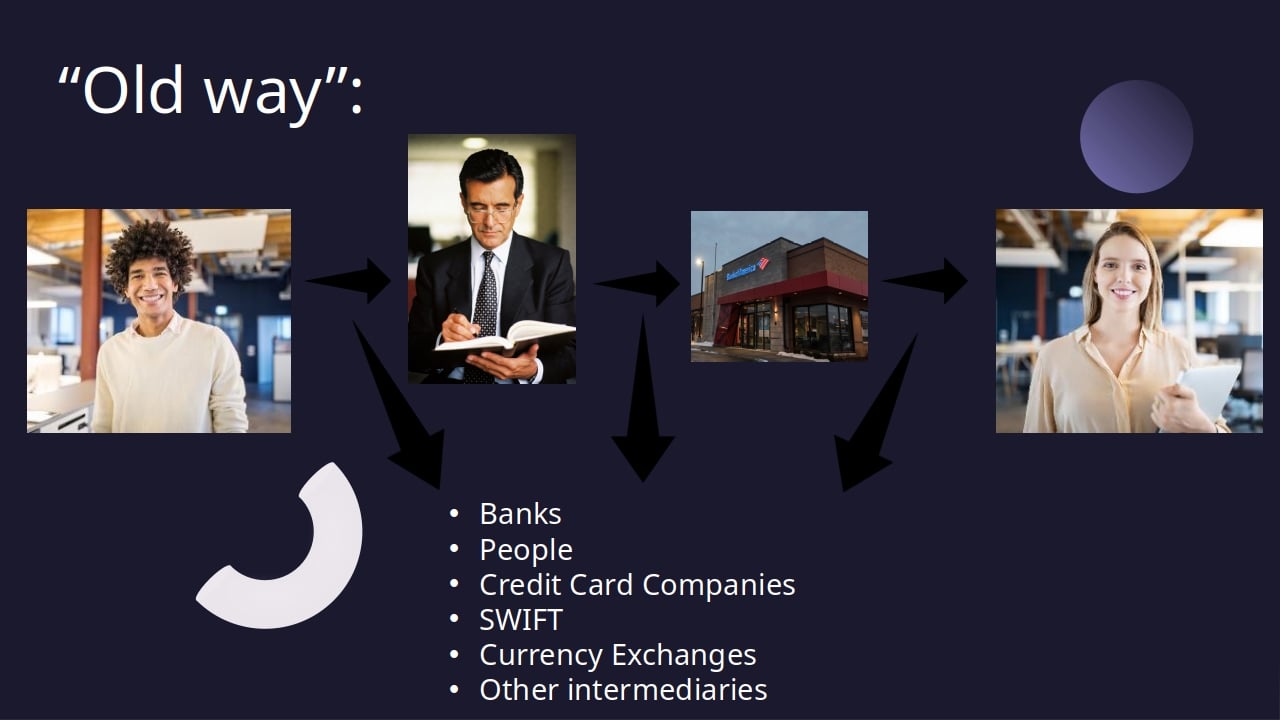
The process worked like this:
- I ask my bank to send money.
- They open their secret book to check if I have the funds.
- They subtract $100 from my line.
- They communicate with another bank (and many other institutions), which adds $100 to my friend's line in their secret book.
This system is slow and requires a lot of trusted parties.
Because the banks own the ledger, they have total control. They can charge high fees, take days to settle transactions, and can block anything you might want to do. If they don’t like who you are, they can simply close the book on you.
It sounds conspiratorial and is probably not an issue for the average person in a developed country, but if you are a persecuted journalist in a dictatorship, or 75% of the world’s poorest population, debanking and underbanking can be a real danger.
According to the World Bank's Global Findex, about 1.4 billion adults (roughly a quarter) remain unbanked, with many more underbanked.
In essence, we had the internet for sending information freely, but we were still using medieval methods for sending value.
The Breakthrough: Electronic Cash
In 2008, Satoshi Nakamoto published the Bitcoin Whitepaper and asked a radical question:
What if we took the "Master Book" away from the banks and gave everyone a copy instead?
Satoshi is the world famous anonymous person who arguably created the world’s first fully functional Peer-to-Peer Electronic Cash.
The goal was to allow online payments to be sent directly from one party to another without going through any third parties (trustless).
It was the invention of digital transfers that didn't rely on a central authorities.
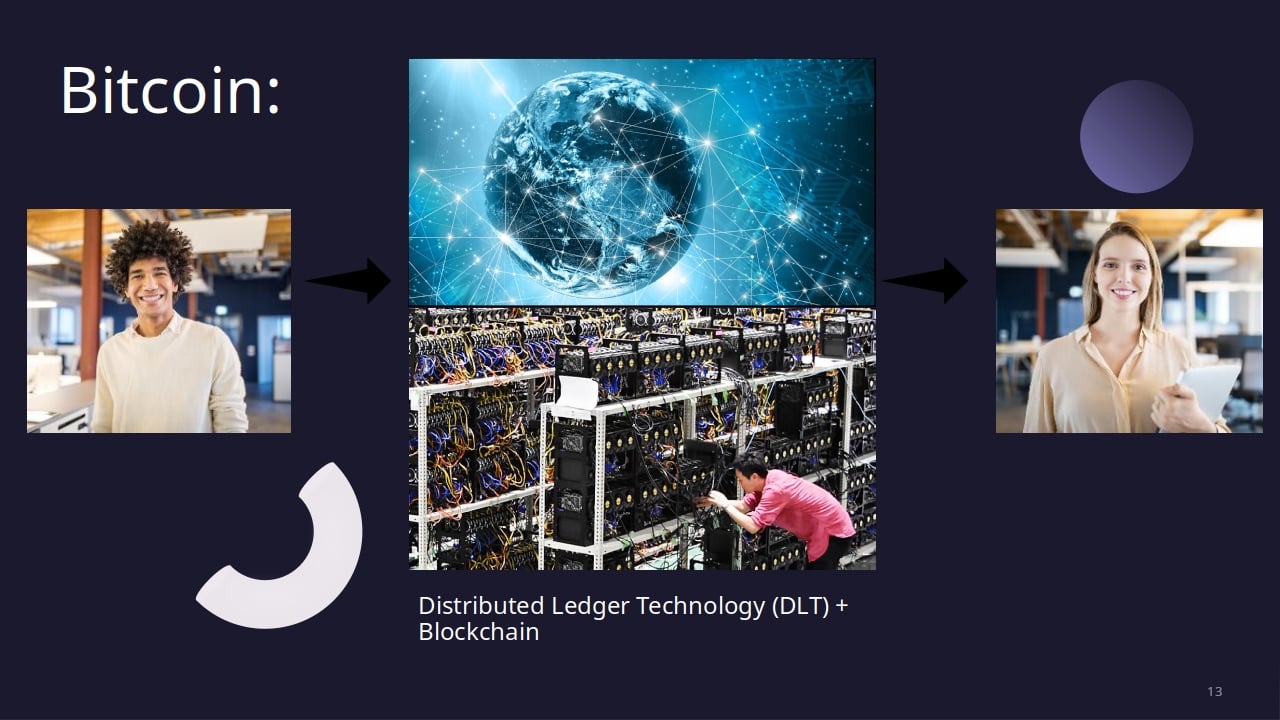
But you may be wondering: if there is no bank, who keeps the books? What stops people from sending the same digital $100 to two different people?
The New Bookkeepers
To replace the bank, Bitcoin introduced a global, decentralized network of bookkeepers.
We call them Miners. (More precisely: every participant runs a "full node" that keeps and checks the entire ledger; Miners are the nodes that compete to add new blocks.)
Instead of a guy in a suit validating your transaction, thousands of computers around the world compete to validate blocks of transactions. They don't know who you are, they don't care, they only check and bookkeep.
They simply verify the math and what you can send based on your password/private key. Then they update the public ledger (the Blockchain), and secure the network.
For the first time in human history, we had a way to transfer value globally that was completely permissionless. It bypassed the need for approvals and privacy destroying intermediaries.
How does it work? With cryptography.
Basically a math proof that was used to allow Miners to verify transactions and keep balances without being able to steal funds or make fraudulent trades. They do a bunch of necessary and extra math, and receive a fee (possibly) in return for their hard work.
All Miners have to agree on all balances and transactions (for Bitcoin at least). This keeps the network secure.
That's why Bitcoin is considered the world's first functioning and widely adopted CryptoCurrency.
It was just cash transfers for the internet age.
Or was it???
Pretty quickly, Bitcoin started gaining value. How? A cryptocurrency built from nothing but “Miners” doing math?
The value of Bitcoin, however, is a subject for another time.
For now, we can understand the first problem that CryptoCurrency ever solved: cash. Hence the word Currency. But not every CryptoAsset is a CryptoCurrency.
Satoshi solved transfers, but what else did he create?
____________
The rCryptoCurrency Academy Path Forward

This was step one. Bitcoin proved that a decentralized ledger could work as sound money.
But why is Bitcoin the digital gold standard for secure transactions? What came next? How did we move from simple transfers to complex full decentralization?
In the coming weeks (or in your own time), the rCryptoCurrency Academy will walk through the evolution of this technology step by step.
From CryptoCurrency to CryptoAssets to Decentralized Governance.
rCryptoCurrency Academy:
Course 1: The History of CryptoCurrency
- Lesson 1: What is CryptoCurrency after all? The Bitcoin Story (You Are Here)
- Lesson 2: The Evolution of Money (Debt, Barter, Gold, Fiat, and Crypto) (Next Lesson)
- Lesson 3: How a Blockchain Works (The "Public Ledger" Explained)
- Lesson 4: Other CryptoCurrencies
Course 2: Types of CryptoAssets
- Lesson 5: The World Computer, Ethereum, and other Smart-Contract Cryptos (Protocols)
- Lesson 6: Tokens
- Lesson 7: Crypto Layer 2 and other Layers
- Lesson 8: Private Chains
- Lesson 9: Types of CryptoAssets
Course 3: CryptoAsset Tools and Finance
- Lesson 10: Common Crypto Mistakes and How to Spot Scams
- Lesson 11: Educational How to Buy CryptoAssets. Centralized Exchanges (CEX) and Decentralized Exchanges (DEX)
- Lesson 12: Wallets & Keys (Hot vs. Cold Storage)
- Lesson 13: Transactions (Gas Fees, Mempools, and Block Explorers)
Course 4: CryptoAssets and the Smart Economy
- Lesson 14: Introduction to DeFi (Decentralized Finance)
- Lesson 15: NFTs: Beyond the JPEGs (Digital Identity and Ownership)
- Lesson 16: Real World Assets (RWA) & Tokenization
- Lesson 17: The Banking System with Stablecoins & CBDCs
Course 5: CryptoAssets and the Law
- Lesson 18: Smart Contracts and Legal Validity
- Lesson 19: Oracles & The Law
- Lesson 20: Digital Evidence & Chain of Custody (What happens when things go wrong?)
Course 6: The Frontier Tech of CryptoAssets
- Lesson 21: Proof of Work vs. Proof of Stake (Miners vs. Validators)
- Lesson 22: Layer 2 Solutions (Scaling)
- Lesson 23: Algorithms trading and AI agents
- Lesson 24: The Metaverse
Course 7: Crypto Institutions (Governance & Compliance)
- Lesson 25: Corporate Structures in Crypto
- Lesson 26: What are rCryptoCurrency Moons?
- Lesson 27: DAOs and The rCyptoCurrency Non-Profit Model
- Lesson 28: The Future
Disclaimer: This content is for educational purposes only and does not constitute financial or investment advice. The technology described involves risks. Never invest money you cannot afford to lose.