Welcome back to the rCryptoCurrency Academy.

In Lesson 1, we learned that Bitcoin is "digital cash" that removes the bank from the middle. In Lesson 2, we learned that money is a technology we use to track value, and Bitcoin could be the next evolution, fixing the infinite “money printing” of Fiat.
But this leaves a technical hole in the story.
If there is no bank... who keeps track of the money?
The answer is the engine that powers the entire industry. The Blockchain.
The Problem: The Trust Gap
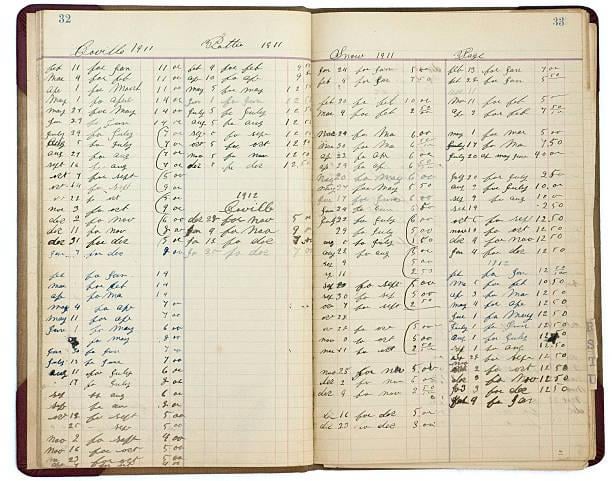
In the old world, you trusted the Bank to keep the "Master Ledger" (the record of all accounts) safe in their private books/ledger.
- Bob has 100 coins
- Alice has 20 coins
- Bob sent Alice 10 coins
- Bob now has 90 coins
- Alice now has 30 coins
You couldn't see it. You just had to trust that they wouldn't delete your money or freeze your account. Up until the 1960s, these books were physical. Currently, they are on the bank's servers.
In addition, you had to trust that the money kept its value. Even though, historically, many fiat currencies have failed, and all of them steadily lose purchasing power to inflation over time.
Satoshi Nakamoto realized that to build a decentralized currency, we didn't need a better bank. We needed to get rid of the secret book entirely.
And we needed to have control of the creation of this new form of money.
The Solution: The Public Ledger
A ledger is basically a book.
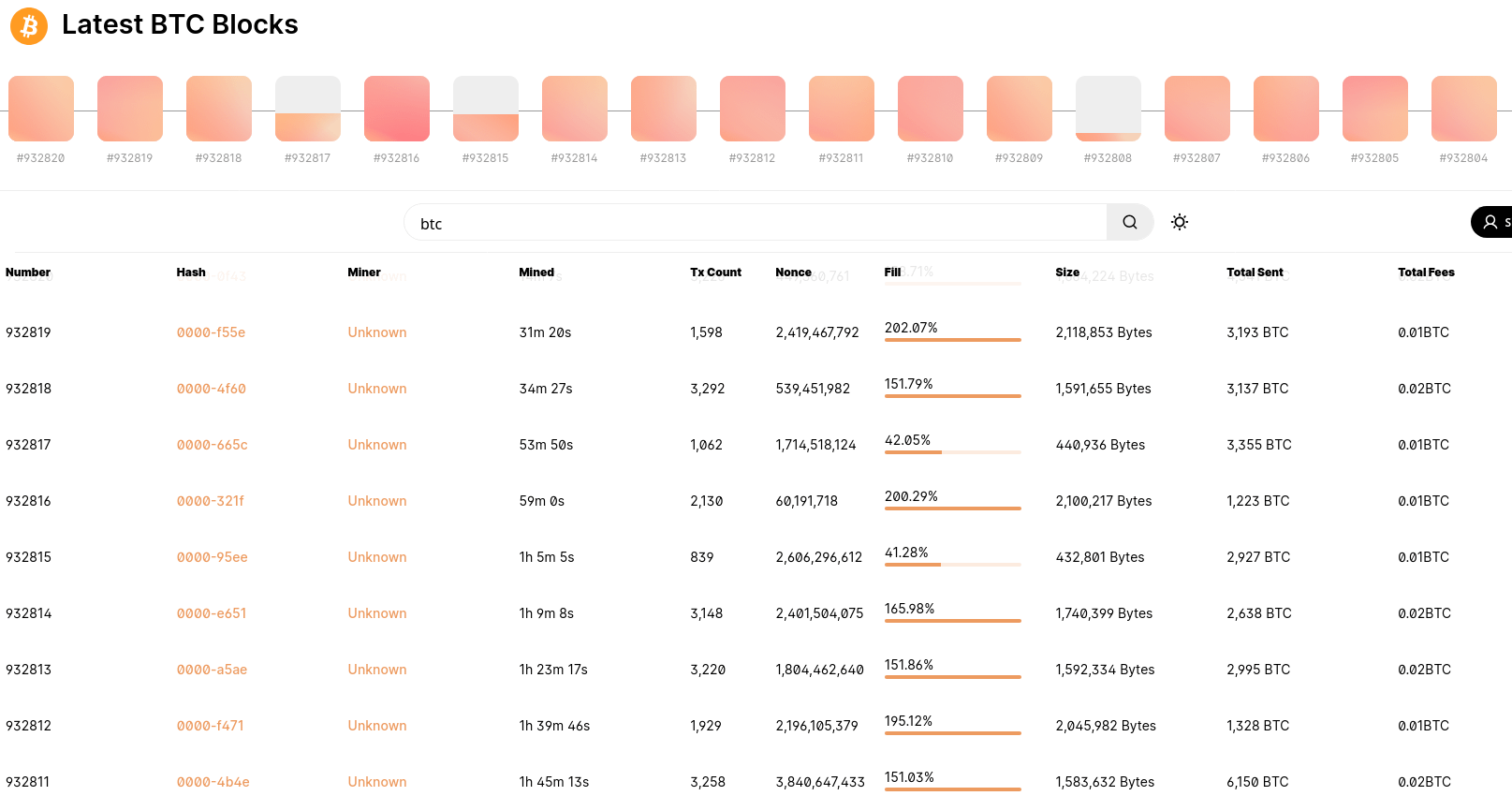
Imagine a Book that anyone can read in the middle of the internet’s Town Square.
Anyone in town can walk up to this book and post a signed transaction.
“Bob pays Alice 5 coins. Signed Bob”
Everyone else can see it. Because everyone can see it, everyone knows exactly how much money everyone else has. You can’t lie and say “I have 100 coins” if the board clearly shows you only received 50.
In technical terms, this is a Distributed Public Ledger.
- Distributed: Everyone has a copy.
- Public: Anyone can read it.
- Ledger: It’s just a list of transactions.
This is only possible because we can verify digital signatures with reasonable security. This is due to a technical thing called “Public key/Private Key Cryptography”, a relatively recent mathematical advancements (from the 1970s) that computers and the internet allowed us to implement for this end. We can now verify that Bob signed the transaction without even the verifiers being able to fake Bob’s signature.
Blocks and Chains
So, why is it called a "Blockchain"?
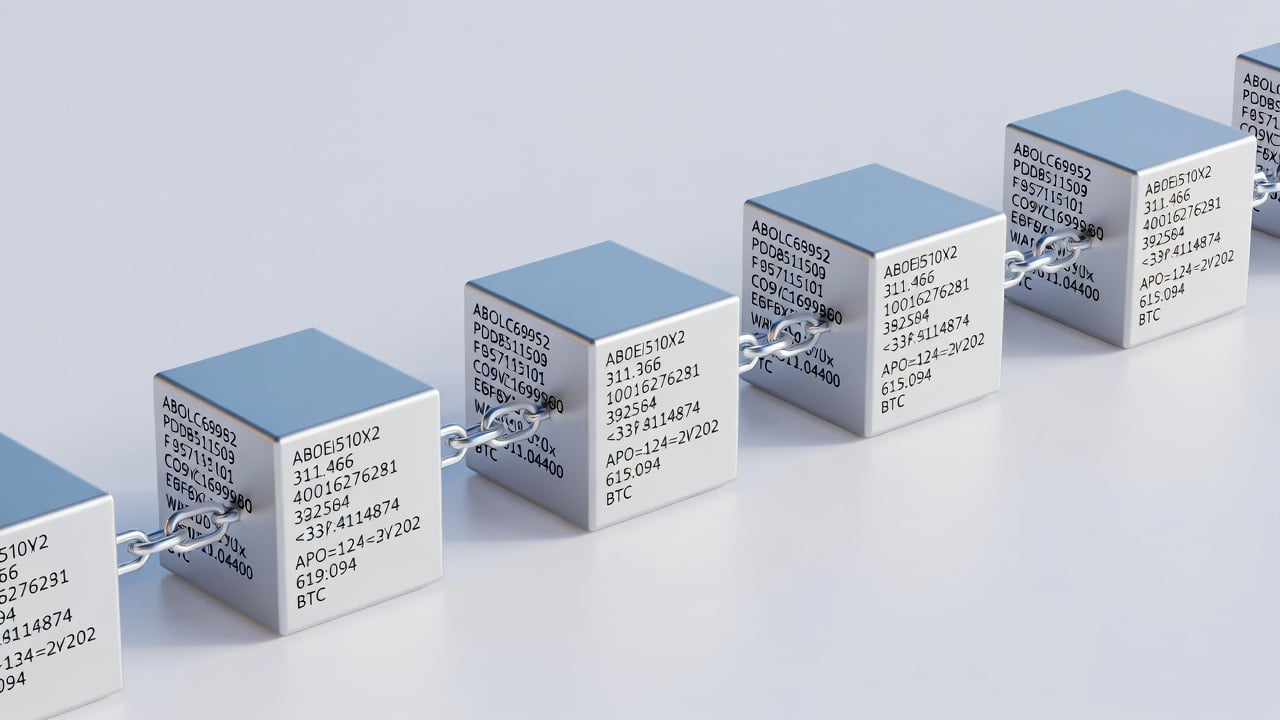
Think of the entire history of Bitcoin transactions not as a random list, but as an organized ledger full of pages (blocks). The blocks are connected to each other, forming a chain of blocks.
- The Transaction: You buy coffee. This data is written down.
- The Block (The Page): Eventually, the page gets full of transactions. A "Bookkeeper" (Miner) verifies that the transactions are valid, seals the page, and adds a timestamp. This sealed page is a Block. The miner usually receives a small amount of BTC for this "bookkeeping". These are called "mined bitcoin". They may also receive a transaction fee from users.
- The Chain (The Glue): This is the magic part. Before the Miner starts a new page, they take a mathematical "fingerprint" (hash) of the previous page and write it at the top of the new one. Like numbered pages.
This links all pages together digitally.
If even a single transaction or block is different, every following block's hash no longer matches, so honest nodes reject the tampered chain. The network sees the broken chain, rejects it, and follows the valid chain with the most accumulated mining work.
This makes the history of money Immutable (unchangeable).
The First Page: The Genesis Block
Every chain has to start somewhere. You can trace every single Bitcoin in existence back to when it was first "mined", through the pages of history, all the way to Page 1.
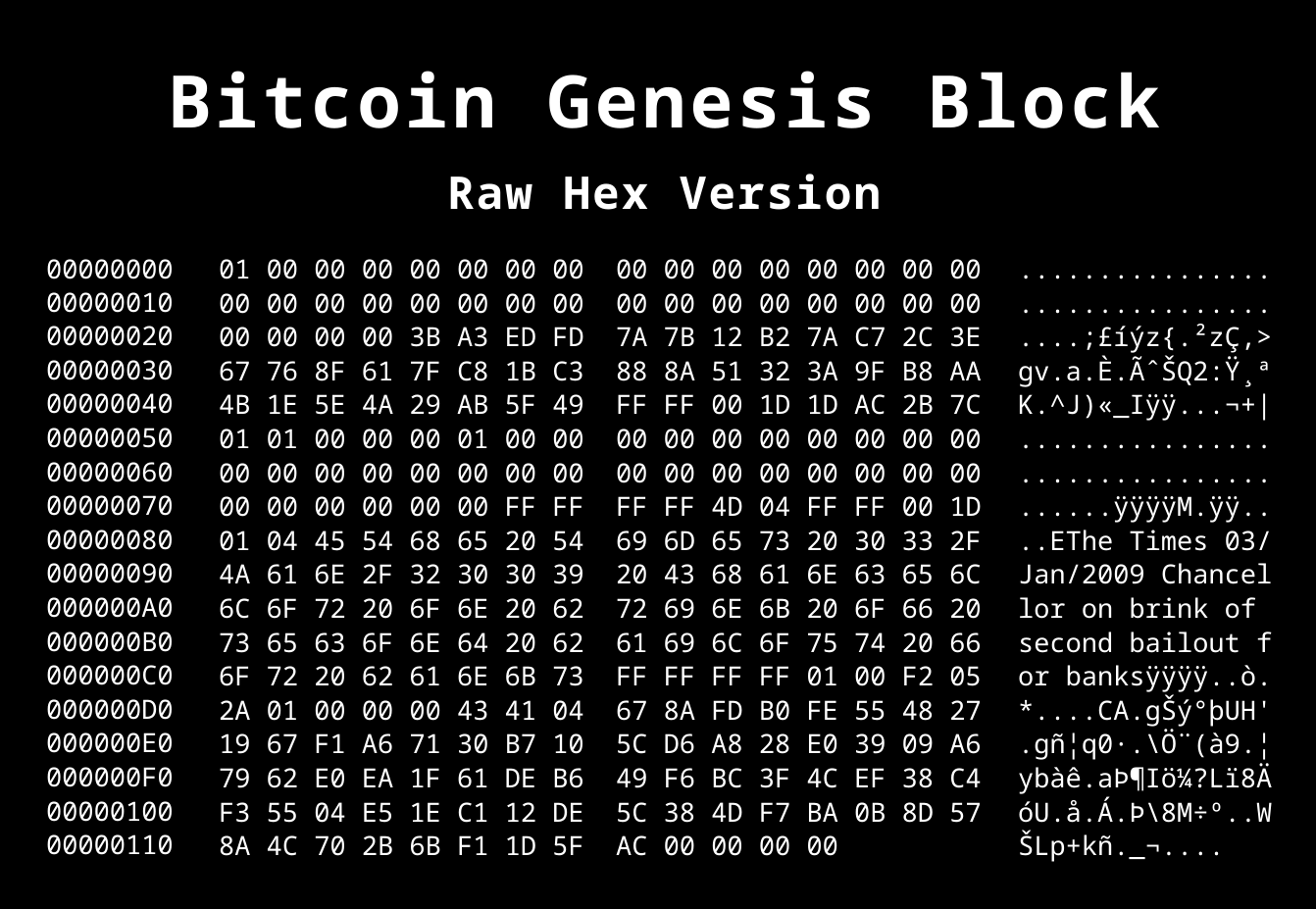
We call this The Genesis Block (Block 0).
When Satoshi Nakamoto mined this first block on January 3rd, 2009, he didn't just start a currency. He left a message inside the code of the first transaction: a digital timestamp to prove exactly when it began, and perhaps, why it began.
Included in the raw data of that first block was this text:
>"The Times 03/Jan/2009 Chancellor on brink of second bailout for banks"
It was a direct reference to the front page of The Times newspaper in London that day. It served two purposes:
- Proof of Timestamp: Proving Bitcoin wasn't pre-mined in secret years prior.
- A Declaration: The headline was about the failure of the modern banking system (bailing out banks after the 2008 crisis with newly printed money). Bitcoin was the answer.
Summary
A Blockchain is not magic. Even though we like to joke that it is. "Any sufficiently advanced technology is indistinguishable from magic".
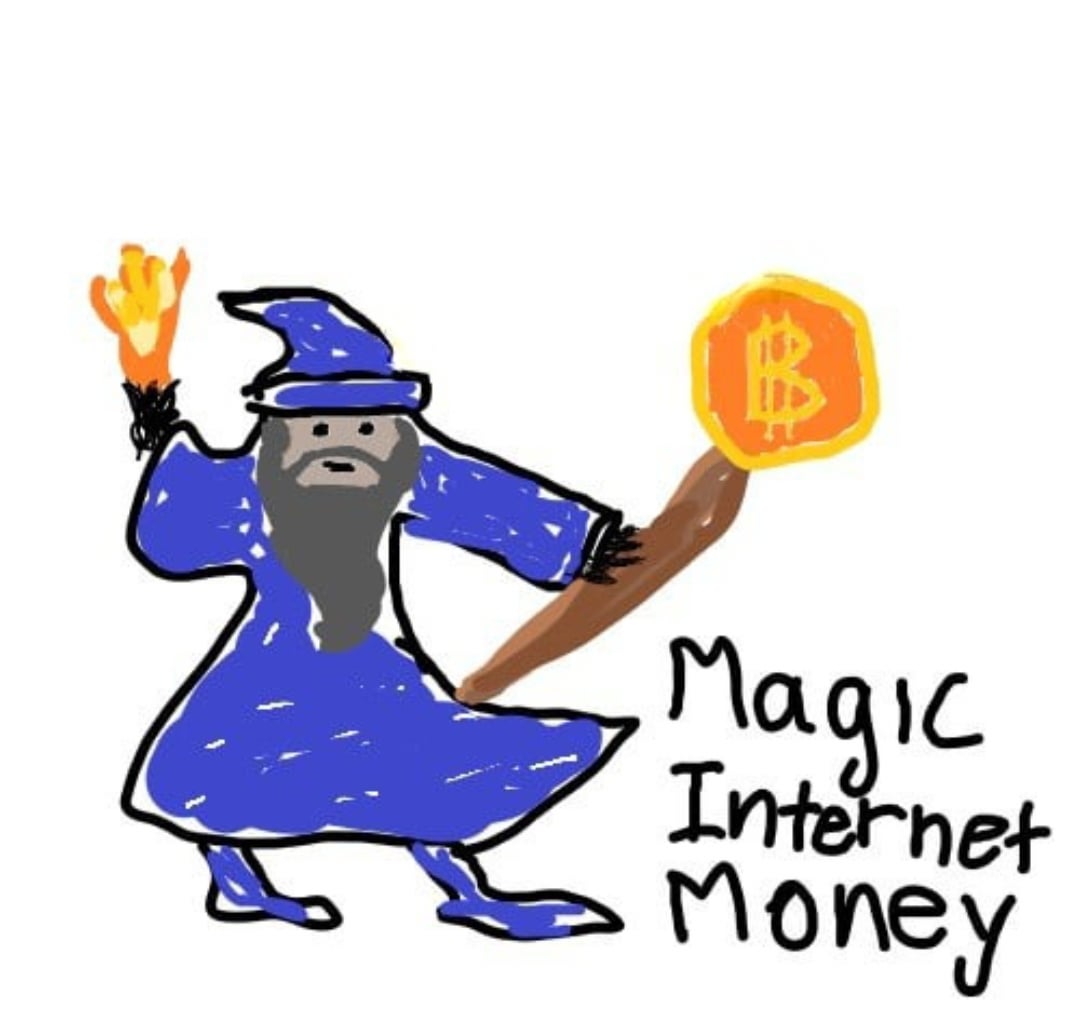
Blockchain is a Shared Notebook of history.
- Instead of a bank hiding the ledger, everyone holds a copy.
- Blocks are the pages of history.
- Chains are the mathematical proof that the pages haven't been torn out or rewritten.
The 21 Million Bitcoin
One final rule governs this public notebook, and it is perhaps the most important one. Unlike fiat currencies, which can be printed endlessly by central banks effectively diluting your savings, the Bitcoin software has a hard limit: there will only ever be 21 million bitcoins. This rule is absolute and is protected by the consensus of the entire network.
If a miner tries to create more coins than the schedule allows, the rest of the network will reject their page as "fake". Only real bitcoins can go on the blockchain.
This makes Bitcoin the first strictly scarce digital object in history. Once the final fraction of a coin is mined (estimated around the year 2140), the supply stops increasing forever, and miners will only earn small transaction fees paid by users.
(This 21 Million hard limit is ONLY FOR Bitcoin. Other CryptoCurrencies may or may not have hard caps)
What came after the Bitcoin Revolution?
Now that we know how Bitcoin works, it's time to learn about how millions of other CryptoCurrencies and CryptoAssets came to be.
Bitcoin was the first successful case, but it wasn't the only one. People quickly started to disagree with Satoshi's visions, terms, and even the technology.
They lauched their own CryptoCurrency.
What differentiates Bitcoin from other newer Cryptos?
And finally, a young men's idea to transform Bitcoin into a decentralized internet computer ends up creating the world's second largest Crypto?
That’s the subject of Lesson 4. See you then.
rCryptoCurrency Academy:

Course 1: The History of CryptoAssets
- Lesson 1: What is CryptoCurrency after all? The Bitcoin Story
- Lesson 2: The Evolution of Money (Debt, Barter, Gold, Fiat, and Crypto)
- Lesson 3: How a Blockchain Works (The "Public Ledger" Explained) (You Are Here)
- Lesson 4: Other CryptoCurrencies (Next Lesson)
Course 2: Types of CryptoAssets
- Lesson 5: The World Computer, Ethereum, and other Smart-Contract Cryptos (Protocols)
- Lesson 6: Tokens
- Lesson 7: Crypto Layer 2 and other Layers
- Lesson 8: Private Chains
- Lesson 9: Types of CryptoAssets
Course 3: CryptoAsset Tools and Finance
- Lesson 10: Common Crypto Mistakes and How to Spot Scams
- Lesson 11: Educational How to Buy CryptoAssets. Centralized Exchanges (CEX) and Decentralized Exchanges (DEX)
- Lesson 12: Wallets & Keys (Hot vs. Cold Storage)
- Lesson 13: Transactions (Gas Fees, Mempools, and Block Explorers)
Course 4: CryptoAssets and the Smart Economy
- Lesson 14: Introduction to DeFi (Decentralized Finance)
- Lesson 15: NFTs: Beyond the JPEGs (Digital Identity and Ownership)
- Lesson 16: Real World Assets (RWA) & Tokenization
- Lesson 17: The Banking System with Stablecoins & CBDCs
Course 5: CryptoAssets and the Law
- Lesson 18: Smart Contracts and Legal Validity
- Lesson 19: Oracles & The Law
- Lesson 20: Digital Evidence & Chain of Custody (What happens when things go wrong?)
Course 6: The Frontier Tech of CryptoAssets
- Lesson 21: Proof of Work vs. Proof of Stake (Miners vs. Validators)
- Lesson 22: Layer 2 Solutions (Scaling)
- Lesson 23: Algorithms trading and AI agents
- Lesson 24: The Metaverse
Course 7: Crypto Institutions (Governance & Compliance)
- Lesson 25: Corporate Structures in Crypto
- Lesson 26: What are rCryptoCurrency Moons?
- Lesson 27: DAOs and The rCyptoCurrency Non-Profit Model
- Lesson 28: The Future
Disclaimer: This content is for educational purposes only and does not constitute financial or investment advice. The technology described involves risks. Never invest money you cannot afford to lose.